

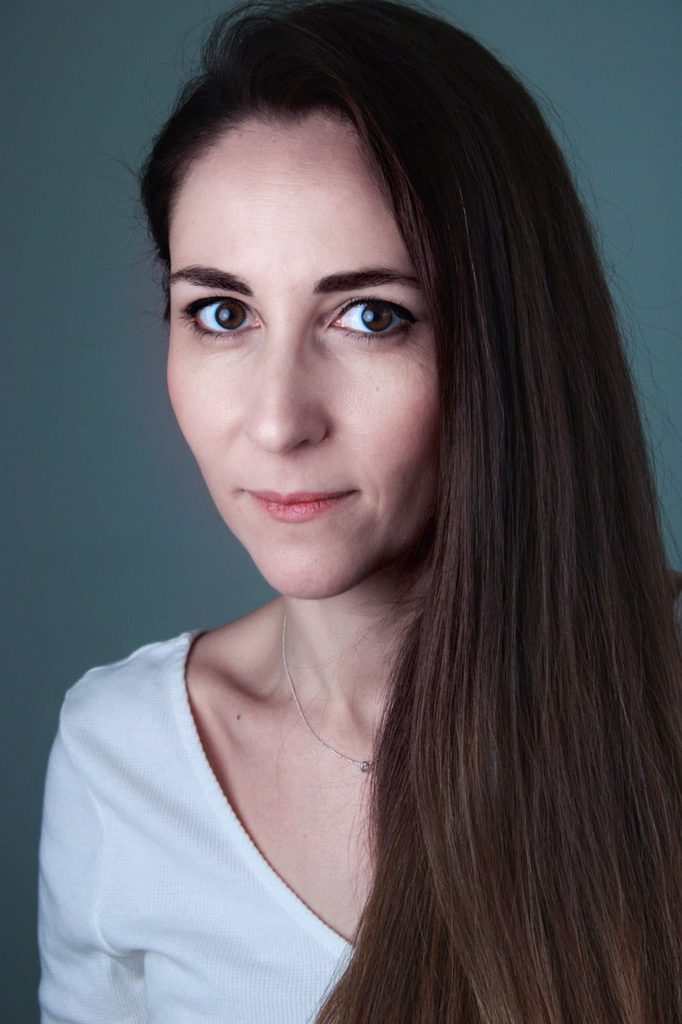
Ekaterina Georgieva was born in 1989, in Burgas, Bulgaria. She graduated from the National High School for Ancient Languages and Cultures Goethe and the National Academy of Theatre and Film Arts Krastyo Sarafov, where she studied in the class of Professor Ivaylo Hristov. Since 2017, she has been a member of the ensemble at the Satirical Theatre in Sofia.
Her plays include Test Drive (2017), The Lucky Man with the Rusty Revolver (2019), Free Fall (2022), which was selected for Eurodram 2022, and Pinecones (2022). The latter was staged at Theatre 199 in 2024, directed by Liza Shopova, and received the 2025 IKAR Award for Dramatic Text, as well as a nomination for the 2025 Askeer Award for Contemporary Bulgarian Drama. In 2025, Free Fall was translated into English and Croatian as part of the DoSEL Workshop.
Selected play: Our boys
Synopsis: Two years after the death of her son Martin, who was brutally beaten by his peers, Katya, a writer, is still struggling to come to terms with her loss. Dissatisfied with the court’s verdict, she decides to meet the mothers of the boys responsible, Maria and Boyana, with the intention of writing a book about the tragedy and exploring the responsibilities of parenthood. What begins as an attempt to understand the events gradually turns into a confrontation between three women with radically different ideas about motherhood, guilt and love. Meanwhile, Katya’s grief has driven a wedge between her and her husband Plamen. As she becomes increasingly absorbed in her meetings and her search for answers, their relationship grows more fragile. The news of her pregnancy brings the possibility of a new beginning, but also exposes their fears and unresolved pain. As the story unfolds, the search for someone to blame gives way to a more complex picture of inherited trauma, dysfunctional relationships and shared responsibility. At the presentation of Katya’s book, a final revelation shifts the focus from the boys’ crime to the role of their mothers, placing Katya herself among them. Our Boys explores the transmission of violence across generations, the limits of parental responsibility and the ways grief can transform relationships. It asks whether individual actions can ever be separated from family histories and social environments, and whether the need for justice can coexist with the possibility of forgiveness.