

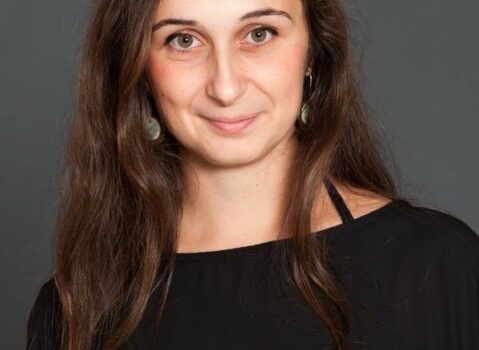
Cities, Borders and Belonging: A Conversation with Tatjana Motta
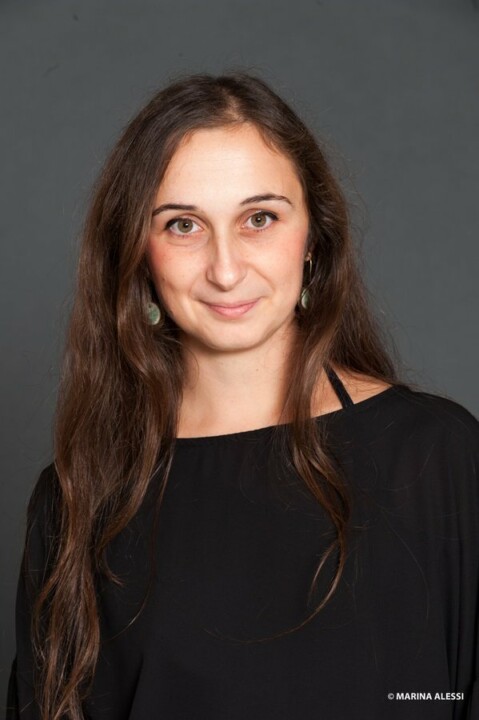
Tatjana Motta studied Visual Arts and Theatre at IUAV University in Venice and Playwriting at the Civica Scuola di Teatro Paolo Grassi in Milan. She is an Italian playwright and screenwriter, author of several theatrical works. She won the 55th Premio Riccione for Notte Bianca, a play that has been translated and presented in several countries, including the United States, Spain, France and Portugal. Since 2017, she has collaborated with director Virginia Landi. Their most recent collaboration, Tristano e Isotta, emerged from a playwriting workshop with upper secondary school students and premiered in December 2025 at Teatro delle Passioni in Modena. Her artistic practice spans theatre and cinema, exploring the possibilities of writing and the dialogue between different forms of expression. She lives in Rome.
In this interview, she reflects on the Medusa project, the creative process behind Notte Bianca, and the relationship between urban space, identity, privilege, and the idea of Europe.
What anecdote, feeling, or thought springs to mind when you think about the figure of Medusa?
The first image that comes to mind when I think of Medusa is her face painted on a military shield by Michelangelo Merisi, also known as Caravaggio, which is now exhibited at the Uffizi Gallery in Florence.
How do you usually work? How did the idea for this particular play come about?
I can’t say I have a particular working method. Every text and every project takes a different path from previous ones. I often get ideas while walking, especially in public spaces. My desire to write frequently begins with a reflection on a particular space, with the need to explore what happens in relationships between people when they interact within a specific space and social context.
I wrote Notte Bianca after returning from an artistic residency in Rio de Janeiro. Being on another continent for a residency led me to reflect on how different material circumstances and power dynamics can influence cultural production.
At that point in my life, moving between various precarious and poorly paid jobs, I couldn’t have afforded to travel to the other side of the world. Yet, as a European citizen, I had the opportunity to take part in an exchange project that allowed me to travel and meet other people under the best possible conditions. For me, as an artist, this experience contributed to the writing of a new work. The circumstances that made that writing possible therefore arose from what I consider a privilege.
As a European citizen, I also travelled with a passport that grants access to most countries in the world, while being fully aware that crossing a border, sometimes even the very same border, can be a completely different experience for two people, depending on the rights they are given.
In this experience, I see the intersection of several questions that I believe I was trying to explore through writing Notte Bianca. If I had to identify one that guided me throughout the writing process, it would be the different experiences of moving through public space, depending on the privileges afforded to us by the social and political context in which we live.
How does your play relate to the reality in which you live and work, in terms of its social context, current political issues, and the broader theme of identity?
When I wrote Notte Bianca, I had already been reflecting for some time on what it means to become part of a city, to find one’s place in an urban environment where spaces are increasingly designed according to the logic of profit, while open public spaces and opportunities to meet without some form of financial expenditure are becoming increasingly scarce. As a result, encounters with people whose lives and experiences differ from our own are rare.
I left the small provincial town where I grew up and have since lived in several cities, large and small. I wanted, and still want, to live in a city because cities are where I’ve had the encounters that changed my life. Despite this desire, I’ve never been able to shake the feeling that cities reject those who arrive from elsewhere.
The housing crisis in European cities, and beyond, offers a concrete example of what I mean. The idea that someone’s right to live in a place should come second to someone else’s ability to extract the maximum profit from it turns the city into an exclusive environment, where life becomes a struggle for survival for many people. Inequalities in contemporary cities fragment both urban spaces and social relationships.
Political borders are imaginary lines that often have tragically real consequences for the lives of those who cross them. Those same borders are visible within our cities, divided into areas that are accessible or inaccessible depending on one’s economic privilege. Discrimination based on class, gender or race shapes, designs and, in a sense, sculpts urban space.
If, within a certain nationalist rhetoric, identity is tied to belonging to a place, then making that place almost impossibly inhospitable, forcing those who have no choice but to remain to devote all their energy to simply being able to go on living – paying rent, studying, buying groceries – is, in my view, a form of violence.
And yet people continue to meet, to seek out spaces, to imagine different kinds of cities and landscapes. Theatre, for example, as a public space for artistic creation, has the potential to provide an ideal setting for this kind of creative exchange.
What does Europe mean to you?
My grandparents grew up in a Europe fragmented by wars and political conflicts that seemed impossible to resolve. The Europe imagined by their generation and by my parents’ generation was one in which the violence of the Second World War, in all its forms, here and everywhere else, could never happen again, and in which the meaning of borders would change radically.
This is the vision of Europe I would like to continue believing in.
Tatjana Motta’s Notte Bianca (White Night) will be presented as a staged reading at the MEDUSA Festival in Berlin in November 2026.
Check out the full festival programme and find out more about the event HERE.